

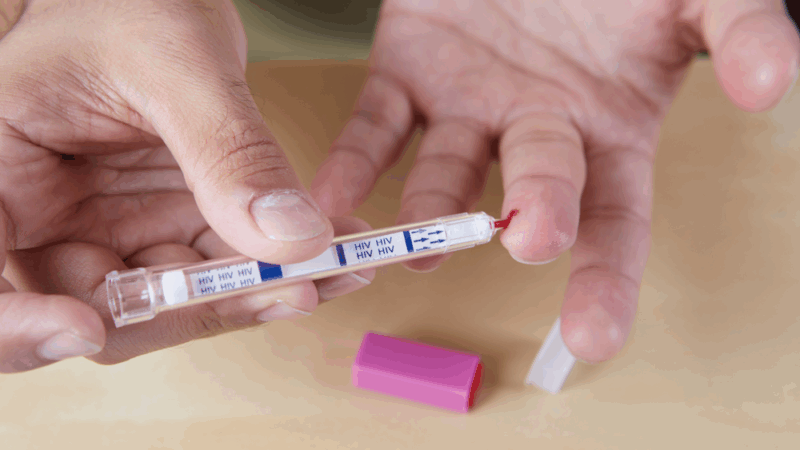
On 1 December, we join communities worldwide to mark World AIDS Day — a day to raise awareness, challenge stigma, and promote early HIV testing.
Early testing can help save lives, and in Essex we are working hard to reduce late HIV diagnoses. A late diagnosis means HIV has already weakened the immune system, which can lead to serious health problems, higher treatment needs, and a greater impact on quality of life. People diagnosed late are also at much higher risk of serious illness and even death compared to those diagnosed early.
Early testing changes everything. It allows people to start treatment sooner, live longer, and reduce the chance of passing HIV on to others.
What we’re seeing in Essex
- Around half of all new HIV diagnoses in Essex are made late, which is higher than the national average.
- HIV is not limited to any one group. While historically most diagnoses were among gay and bisexual men, recent years have seen a rise among heterosexual men and women, including those over 50.
Selina Plant, Clinical Nurse Specialist at Broomfield Hospital, is working with the Essex Sexual Health Service on a project to raise awareness of HIV testing in GP practices and make it easier for people to access tests earlier.
Why testing matters
HIV testing is quick, confidential, and free. Most people get their results within a few days. If HIV is found early, treatment is highly effective meaning people can live long, healthy lives and prevent passing the virus on.
You should consider an HIV test if:
- you have had unprotected sex with a new partner
- you have short flu-like illness symptoms such as a sore throat, a high temperature, swollen glands, muscle aches and tiredness or a skin rash
- you have recently moved to the UK from abroad
- you are registering with a GP for the first time.
For more information about the symptoms of HIV and AIDS, visit the NHS website:
NHS: HIV and AIDSWe know that stigma and fear can stop people from asking for a test. But HIV testing should be seen as routine — just like checking blood pressure or cholesterol. It’s a simple step that can help save lives.
Working together
To strengthen this work, NHS Mid and South Essex Trust’s HIV Service is exploring the role of GP HIV Champions — clinicians who promote routine HIV testing and share best practice across primary care. This initiative is inspired by a successful programme in London aimed at improving care for people living with HIV.
If you’re a GP and would like to learn more about becoming an HIV Champion, please contact Selina Plant at: [email protected]
This World AIDS Day, let’s make HIV testing routine to help reduce late diagnoses, and ensure everyone in Essex has access to the care they need.
Where can I get support locally?
If you require sexual health support locally, please contact the Essex Sexual Health Service.
Sexual health clinics are free and available to everyone, no matter your age, gender, ethnicity or sexuality.
If you need to talk, you can call the Essex Sexual Health Service helpline via 0300 003 1212.
Essex Sexual Health Service NHS: find a local sexual health clinic